Cataract:
Symptoms, Diagnosis and Treatment
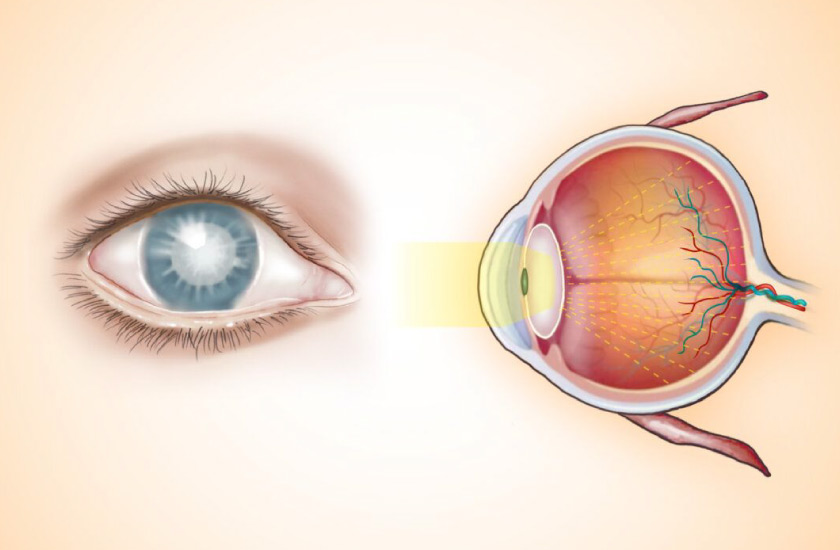
A cataract is one of the most common eye conditions and is most often associated with ageing. It occurs when the eye’s natural lens gradually becomes cloudy, resulting in progressive deterioration in vision.
Although cataracts are mainly associated with the normal ageing process, their development may also be influenced by other factors, including diabetes, certain medicines, previous eye injuries and other eye conditions.
Symptoms
Cataracts usually develop gradually and painlessly. Common symptoms include:
- Blurred or cloudy vision
- Difficulty seeing in low light or at night
- Increased sensitivity to bright lights and oncoming headlights
- Glare or halos around lights
- Colours appearing faded or less vivid
- Frequent changes to your glasses’ prescription
- Double vision through the affected eye in some cases
Diagnosis
A cataract is diagnosed by an ophthalmologist following a comprehensive eye examination. The examination includes an assessment of your visual acuity and the condition of the lens. Other parts of the eye are also examined to rule out other possible causes of reduced vision.
Treatment
In the early stages, improving the lighting in your surroundings and having the correct glasses prescription may help to improve your vision and manage your symptoms.
There are currently no medicines that can reverse the clouding of the lens. When a cataract significantly affects your vision or interferes with your everyday activities, surgery is the definitive treatment.
Cataract Surgery
Modern cataract surgery is performed through small incisions. The cloudy natural lens is removed and replaced with an artificial lens, known as an intraocular lens (IOL), which remains permanently in the eye.
The operation is usually performed under local anaesthetic and, in most cases, does not require an overnight stay in hospital. Vision generally begins to improve gradually after surgery, although the recovery period varies from person to person.
When Should You Have an Eye Examination?
A gradual change in the quality of your vision should not always be considered a normal part of ageing. You should have a comprehensive eye examination if you experience blurred vision, difficulty driving at night, increased discomfort from bright lights, or changes in the way you see colours.